Posts

We Believe the Black-Jewish Alliance is Worth Rebuilding

By David Jefferson and Matthew D. Gerwitz|

We are two clergymen from greater Newark, one Black and one Jewish. Last year we co-officiated Sen. Cory Booker’s wedding to Alexis Lewis, and this spring we led New Jersey’s first Freedom Seder.

Recently, we came together again to participate in the 2026 Atlanta Summit of Black Pastors and Rabbis to explore whether the historic Black-Jewish alliance can be rebuilt.

Previous generations of Black Americans and Jews worked hand in hand to end discriminatory housing practices, integrate schools and ensure that hate crimes are prosecuted to the fullest extent of the law.

But more recently, the war in Israel and Gaza, the fight over diversity programs and the resurgence of antisemitism and racism have put our communities on the defensive, with each side keeping score of who spoke up for whom and who stayed quiet.

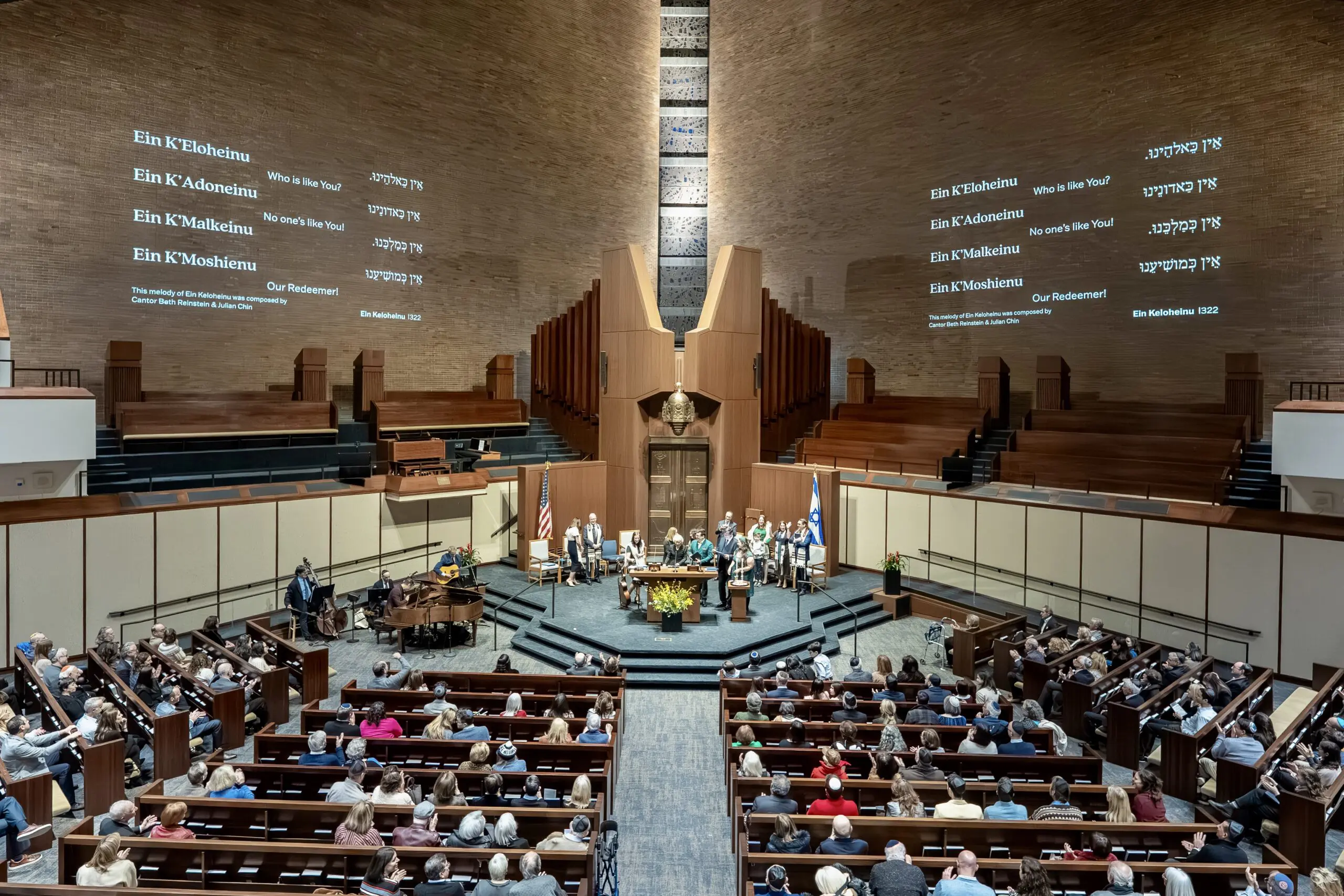
In Atlanta, 30 senior rabbis and 30 senior Black pastors spent three days at The Temple, a synagogue whose rabbi preached against segregation in 1950s Georgia, and Ebenezer Baptist Church, where Dr. Martin Luther King Jr. preached and where Sen. Raphael Warnock preaches today.

In 1958, someone set off 50 sticks of dynamite in The Temple’s entranceway. The building was severely damaged and everyone knew why: The Temple’s leader, Rabbi Jacob Rothschild, had spent a decade denouncing segregation and championing racial integration. The echoes of that bombing continue to reverberate today.

The summit required every participant to bring a partner from the other community. We came as a pair and participated in conversations we had never had with each other before.

We did not leave Atlanta agreeing on everything. We left with an agreement not to abandon one another.

Listening across disagreement
The rabbis shared that Jews feel unsafe right now and that the country does not seem to be taking the rise in antisemitism seriously.

The pastors responded that from the outside, the Jewish community appears organized, well-connected and able to get a hearing in Washington, D.C. and city halls, a privilege that is sometimes taken for granted.

We accept that both sentiments are true, even if they are uncomfortable to hear.

What the Jewish half of the room needed the Black half to hear: There are fewer than 16 million Jews in the world and nearly half live in Israel. Using words such as genocide, apartheid and settler-colonialism to describe that country reduces a complex conflict to a social media morality play.

There is room for difficult conversations about Israel and many Jews are prepared to engage the harshest critiques of Israeli policy. But Jews are not prepared to accept politicians and activists who treat the existence of the place where half their people live as debatable.

American Jews are hiding their Stars of David and using generic-sounding names on delivery apps so strangers will not know their religion. If we defend the right of self-determination for some, we must defend it for all.

What the Black half needed the Jewish half to hear: That the Jewish community does not always perceive its own power. That Black women, who make up 14% of the workforce, absorbed a devastating share of the layoffs of the past two years, including nearly 55% of all female job losses, while watching prominent Jews rally against the diversity programs designed to protect them.

That Black Americans helped liberate the Nazi death camps in World War II and then came home to a country that denied many of them the GI Bill benefits that helped propel Jewish veterans into universities and economic opportunity.

That Black elected officials have historically been among the Jewish community’s most reliable partners, yet Jewish leaders often focus on the few Black politicians who have strayed.

For much of the 20th century, Jews who were white could choose when to be a minority. Black Americans have never had that choice.

A covenant for the future
The participants adopted a covenant affirming that “Black lives, Jewish lives, Black Jewish lives and all human lives possess a sacred worth that precedes every government, institution, racial category, national boundary or political ideology.”

It commits us to honesty, accountability, repair and forgiveness where possible. Neither of our faiths permits us to believe that a people are fixed forever in their worst moment. Taking another people’s suffering seriously is part of how we heal our own.

Both of our communities are under threat right now and neither is large enough to respond alone. This is precisely the moment when people withdraw into their own corners seeking safety. This is what the hate-mongers are counting on.

Solidarity is easy when agreement is simple. But true solidarity is the refusal to abandon one another when agreement feels impossible.

We are in covenant now, and a covenant is a promise about what happens the next time solidarity bears a cost.

Someone once put 50 sticks of dynamite in the doorway of a Georgia synagogue to stop this work.

We sat in that building again last week and started anew.

Rev. Dr. David Jefferson Sr. is senior pastor of Metropolitan Baptist Church in Newark.

Rabbi Matthew D. Gewirtz is senior rabbi of Temple B’nai Jeshurun in Short Hills.

View article online here